
Historic Jury Verdicts Against Meta: What the $375 Million New Mexico Win Means for West Virginia Families
The late-night glow of a phone screen has become a familiar sight in homes across the Kanawha Valley and throughout West Virginia. A teenager locked in her room for hours, scrolling through Instagram. A middle schooler in Huntington stopped eating lunch because of comments on a post. A high school student in Morgantown whose anxiety attacks started the same year he downloaded TikTok. For years, parents watched this unfold with a sinking feeling that something was deeply wrong—but without any clear path to hold the companies responsible.
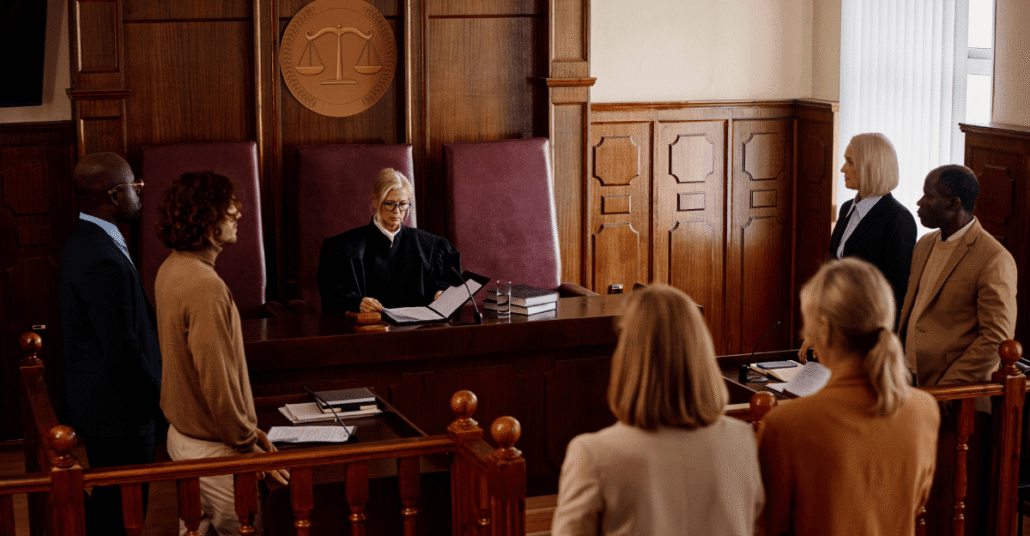
That changed in March 2026. In the span of two days, juries in New Mexico and California delivered historic verdicts against Meta Platforms, finding the company liable for deliberately designing social media products that addict and harm children. These rulings shattered decades of legal protection for tech companies and opened the door for thousands of families to pursue accountability. At Powell & Majestro P.L.L.C., we are closely monitoring these developments and helping West Virginia families understand their legal options. Call us at (304) 346-2889 for a free consultation.
What Did the Jury Decide in the New Mexico Social Media Lawsuit Against Meta?
On March 24, 2026, a Santa Fe jury ordered Meta to pay $375 million in civil penalties after finding the company violated New Mexico’s Unfair Practices Act by misleading consumers about the safety of Facebook and Instagram for children. This marked the first state attorney general jury trial victory against a major social media company over child safety failures.
New Mexico Attorney General Raúl Torrez filed the lawsuit in December 2023 after an undercover investigation revealed how easily predators could contact children through Meta’s platforms. The seven-week trial in New Mexico’s First Judicial District Court laid bare internal company communications showing that Meta executives understood the risks their products posed to young users and chose profit over protection. The jury applied the maximum penalty of $5,000 per violation across thousands of underage accounts.
Meta has stated it will appeal, but the verdict stands. A second phase—a bench trial beginning May 4, 2026—will address whether Meta created a public nuisance and whether the court should mandate sweeping design changes to its platforms.
How Did the California Bellwether Trial Change the Legal Landscape for Social Media Harm Claims?
One day after the New Mexico verdict, a Los Angeles Superior Court jury in the K.G.M. case found Meta and YouTube negligent for designing platforms that contributed to a young woman’s severe depression and anxiety. The jury awarded $6 million in total damages, rejecting defense arguments that other life factors caused the harm and validating that addictive platform design itself can constitute a defective product.
The plaintiff, now 20 years old, testified she began using YouTube at age six and Instagram at age nine. Over time, she developed depression, body dysmorphia, and crippling anxiety linked to the platforms’ compulsive design. Her attorneys compared features like infinite scroll, algorithmic recommendations, and push notifications to the mechanics of a slot machine—engineered to keep users engaged regardless of the psychological cost. After more than 40 hours of deliberation, the jury assigned Meta 70 percent of the liability and Google 30 percent, awarding both compensatory and punitive damages.
This case served as the first bellwether trial in the California Judicial Council Coordination Proceedings, testing the theories that underpin roughly 1,600 similar consolidated cases. The specific platform features the jury found harmful include:
- Infinite scroll that eliminates natural stopping points and encourages endless engagement
- Algorithmic content feeds that prioritize emotionally provocative material to maximize time on the platform
- Push notifications designed to pull users back at all hours, including during school and sleep
- Like and follower counts that create a feedback loop of social validation tied to self-worth
Why Are These Verdicts Being Called Social Media’s “Big Tobacco” Moment?
Legal analysts compare these rulings to the landmark tobacco litigation of the 1990s because juries accepted that social media platforms are defectively designed products that knowingly addict users. Like tobacco executives who denied nicotine was addictive while internal documents proved otherwise, Meta’s own research showed its platforms damaged young users’ mental health while the company publicly claimed they were safe.
During the New Mexico trial, prosecutors presented internal Meta communications from 2019 showing that executives understood encrypting Facebook Messenger by default would make it harder to report child sexual abuse material to law enforcement—and moved forward anyway. These internal documents mirror the dynamic that broke the tobacco industry: private knowledge of harm coupled with public denial.
The legal strategy mirrors the tobacco playbook as well. Plaintiffs framed claims around the companies’ own design decisions rather than user-generated content, sidestepping Section 230 of the Communications Decency Act. The Massachusetts Supreme Judicial Court reinforced this approach on April 10, 2026, becoming the first state high court to rule that Section 230 does not protect Meta from lawsuits targeting its deliberate platform design choices.
What Is West Virginia’s Role in the National Social Media Litigation?
West Virginia is actively engaged in national social media litigation on multiple fronts. The state’s attorney general joined a 33-state federal lawsuit against Meta in October 2023, and multiple West Virginia school districts, including Hancock County, have filed their own claims alleging that addictive platform designs drain educational resources and damage student mental health.
The federal lawsuit, filed in the U.S. District Court for the Northern District of California, accuses Meta of knowingly deploying harmful features on Instagram and Facebook that deliberately addict children. West Virginia joined alongside 32 other states as part of a bipartisan investigation underway since 2021. Closer to home, the Hancock County Board of Education voted unanimously in October 2025 to join the national litigation after Superintendent Dan Enich reported mounting costs of counseling and mental health services driven by social media’s effects on students.
The scale of the litigation is staggering. Over 2,400 cases are pending in federal MDL 3047 before Judge Yvonne Gonzalez Rogers in Oakland, and the first federal bellwether trial involving school district claims is set for summer 2026. A West Virginia University study published in 2024 found that teen social media use was linked to depressive symptoms, with Instagram and TikTok showing particular concern. For families from the Northern Panhandle to the coalfields of southern West Virginia, the March verdicts make the legal path forward significantly more viable.
What Types of Harm Can West Virginia Families Claim in a Social Media Lawsuit?
West Virginia families may pursue claims for mental health injuries their children suffered from compulsive social media use, including diagnosed depression, anxiety disorders, eating disorders, body dysmorphia, self-harm behaviors, and suicidal ideation. Successful claims require documented medical diagnoses linked to specific platform use during childhood or adolescence.
The U.S. Surgeon General’s Advisory on Social Media and Youth Mental Health issued a stark warning: up to 95 percent of teenagers ages 13 to 17 use social media, and adolescents spending more than three hours daily on these apps face double the risk of depression and anxiety symptoms. Not every child who uses social media will have a legal claim—the cases moving forward involve children who developed specific, diagnosable conditions that medical providers can connect to social media use. Qualifying injuries include:
- Clinical depression and generalized anxiety disorder diagnosed by a licensed mental health professional
- Eating disorders and body dysmorphia linked to social comparison and algorithmically promoted content
- Self-harm behaviors connected to harmful content exposure or cyberbullying on the platforms
- Sleep disruption and attention disorders aggravated by compulsive engagement loops built into the apps
How Long Do West Virginia Residents Have to File a Social Media Harm Claim?
Under West Virginia law, the statute of limitations for personal injury and product liability claims is generally two years from the date of injury or discovery. For minors, the filing deadline is tolled until the child turns 18, meaning the two-year clock does not begin running until the young person reaches adulthood. Acting quickly remains important to preserve evidence and protect legal rights.
West Virginia’s statute of limitations is governed by W. Va. Code § 55-2-12, which provides a two-year window to file a civil lawsuit. West Virginia also recognizes a discovery rule for cases where the harm develops gradually—a teenager in the Kanawha Valley who began using Instagram at age 12 and was diagnosed with severe anxiety at 16 may not have connected the two until well after the diagnosis. The discovery rule provides that the filing clock starts when the injured person knew, or should have known, both that they were injured and that a specific product likely caused that injury.
For minors, W. Va. Code § 55-2-15(b) provides additional protection by tolling the statute of limitations until the child reaches age 18. Even with this safeguard, waiting creates real risks. Digital evidence—screen time records, app usage data, direct messages—can be lost or deleted. Families in Charleston, Parkersburg, Wheeling, or anywhere in the state who suspect their child was harmed by social media should consult with legal counsel promptly.
What Should West Virginia Parents Do If They Believe Social Media Harmed Their Child?
West Virginia parents who believe social media platforms caused or worsened their child’s mental health conditions should document the child’s diagnoses and treatment history, preserve all evidence of platform usage and screen time data, and consult with an attorney experienced in mass tort litigation to evaluate whether their family has a viable claim for compensation.
Building a strong case starts with evidence that exists right now on your child’s phone, in their medical records, and in their school files.
- Preserve digital evidence. Do not delete social media accounts. Screen time reports, app usage statistics, and direct messages all serve as evidence of compulsive use.
- Obtain medical documentation. Gather treatment records from providers at CAMC in Charleston, Cabell Huntington Hospital, WVU Medicine, or wherever your child received care. A formal diagnosis from a licensed mental health professional is foundational.
- Collect school records. Declining grades, counselor referrals, attendance records, and disciplinary reports help establish a timeline showing behavioral changes that coincided with heavy platform use.
- Contact an experienced attorney. Mass tort litigation involving major tech companies requires legal counsel with the resources to handle complex, multi-jurisdictional cases.
How Do Mass Tort Social Media Cases Differ from a Traditional Class Action?
Social media harm claims proceed as mass tort litigation rather than traditional class actions because each child’s injuries, usage patterns, and outcomes are unique. Individual cases are filed in state or federal court and typically transferred to a centralized multidistrict litigation for coordinated pretrial proceedings, while preserving each family’s distinct claim and their local attorney relationship.
In a class action, a single representative plaintiff pursues claims on behalf of an entire group with a uniform outcome. Mass tort litigation evaluates each plaintiff individually based on the specific harm they suffered, the platforms they used, and the severity of their diagnosed conditions. Most federal cases transfer to MDL 3047 in California for pretrial activity, but a family in Beckley or Martinsburg keeps their West Virginia attorney throughout the process.
Bellwether trials drive the entire process forward. The K.G.M. verdict in California has already shifted settlement dynamics for thousands of pending claims. School district bellwether trials set for summer 2026 will add further pressure on defendants. Each favorable verdict increases the likelihood that Meta, Google, and other defendants will resolve remaining cases through settlement rather than face repeated jury findings of liability.
What Compensation Might Be Available for Families Affected by Social Media Harm?
Families pursuing social media harm claims may recover compensation for medical expenses, including therapy and psychiatric treatment, costs of ongoing mental health care, lost educational opportunities, and damages for pain, suffering, and emotional distress. The March 2026 jury verdicts establishing platform liability have significantly strengthened the potential settlement value of both pending and future claims.
Economic damages cover tangible financial costs: past and future medical bills for therapy, psychiatric care, medication, residential treatment programs, and specialized counseling. Families whose children missed significant school time may also have claims for lost educational opportunities. Non-economic damages address the pain of watching a child withdraw from friends and family, the emotional toll of managing a teenager’s mental health crisis, and the loss of quality of life during formative years.
Every family’s situation is different, and no attorney can guarantee a specific outcome. What the March 2026 verdicts accomplished is fundamentally changing the landscape. Before these rulings, defendants could argue no jury had ever found a social media company liable for addictive design. That argument is gone, and the practical effect is increased settlement pressure across thousands of pending cases.
Protecting Your Family’s Future in the Fight Against Social Media Harm
The landscape of social media litigation has shifted decisively in favor of families. Juries in New Mexico and California have spoken, the Massachusetts Supreme Judicial Court has stripped away a key defense, and thousands of claims are moving toward resolution across the country. West Virginia families affected by social media’s toll on their children’s mental health have every reason to explore their legal options now, while the momentum is strong and the evidence is fresh.
Powell & Majestro P.L.L.C. is dedicated to protecting the rights of injured West Virginians. We handle complex mass tort litigation while providing personalized, compassionate attention your family deserves. Whether your child was treated at CAMC in Charleston, Thomas Memorial in South Charleston, or WVU Medicine in Morgantown, we can evaluate your medical records and help determine whether your family has a viable claim.
Call us today at (304) 346-2889 or reach out through our online contact form to schedule your free consultation. We work on a contingency fee basis, which means you pay no attorney’s fees unless we recover compensation on your behalf.



Leave a Reply
Want to join the discussion?Feel free to contribute!