
Can I Sue Equipment Manufacturers for West Virginia Workplace Injuries?
The moments following a severe workplace accident blur together the rush of emergency responders, the blinding lights of a trauma center, and the immediate, overwhelming panic about your physical and financial future. For workers in West Virginia’s heavy industries, an equipment failure on the job site often results in catastrophic harm that changes the trajectory of a family’s life forever. While your employer likely carries mandatory insurance to cover basic medical bills and a portion of your lost wages, that system rarely accounts for the full devastation of a severe injury.
Do I Have a Claim Against an Equipment Manufacturer in West Virginia?
Yes, if a defective tool, machine, or piece of equipment caused your workplace injury, you can file a third-party product liability lawsuit against the manufacturer in West Virginia. This civil claim exists entirely separate from your standard employer workers’ compensation benefits.
West Virginia law operates under a “no-fault” system for general workplace injuries. This means that, barring cases of deliberate intent where an employer knowingly exposes a worker to a specific, highly dangerous condition, you generally cannot sue your own boss or company for negligence. However, this legal immunity strictly applies only to your direct employer and your co-workers. It does not extend to the outside corporations responsible for putting unsafe products into the stream of commerce.
If an outside entity, such as the company that engineered a faulty conveyor belt, the corporation that assembled a defective forklift, or the distributor that sold an industrial chemical without proper warning labels, contributed to your accident, they owe you a duty of care. Pursuing a product liability claim against these entities allows you to seek a much broader range of financial recovery.
To determine if a third party holds liability for your specific accident, our legal team investigates several factors:
- The origin of the machinery: Identifying the specific corporate entities involved in the design, manufacturing, and distribution chain.
- The nature of the defect: Analyzing whether the danger stemmed from a fundamental design flaw or an error on the assembly line.
- Safety mechanism bypasses: Investigating if the manufacturer designed the equipment in a way that encouraged users to remove safety guards for operational efficiency.
- Maintenance protocols: Reviewing if the manufacturer provided adequate instructions for the safe upkeep and calibration of the heavy machinery.
What Types of Defective Workplace Equipment Cause Injuries in West Virginia?
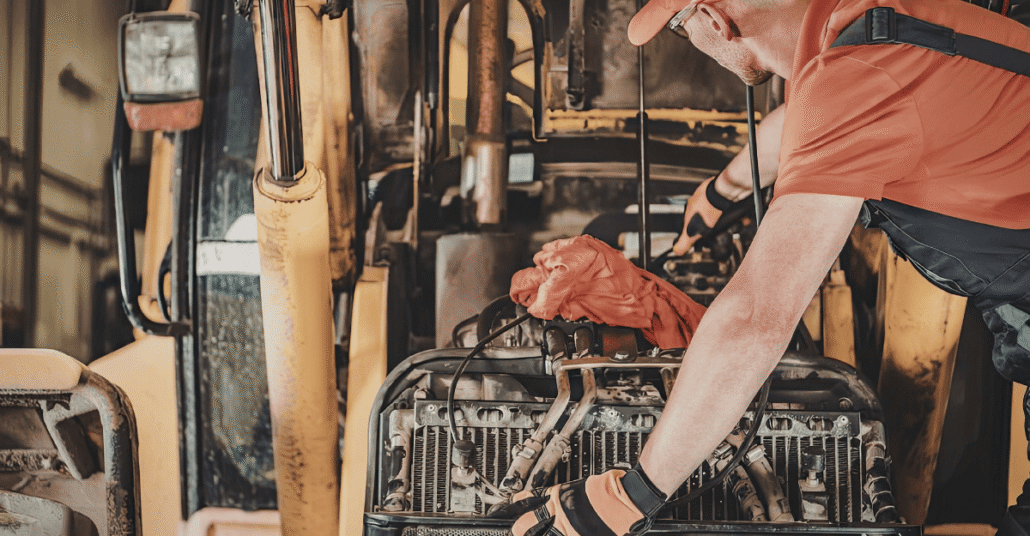
Defective workplace equipment causing injuries in West Virginia frequently includes heavy coal mining machinery, natural gas extraction rigs, industrial manufacturing presses, commercial construction scaffolding, and power tools. When these machines lack proper safety guards or fail mechanically, manufacturers hold direct legal liability.
Our state’s economy relies heavily on industrial labor. From the deep mines in Boone and Logan counties to the fracking operations spread across the Marcellus Shale region, West Virginia workers handle some of the most dangerous equipment in the country daily. A single defective component on a massive piece of industrial machinery can cause a localized disaster.
In the chemical plants and manufacturing facilities lining the Kanawha River in areas like Nitro and South Charleston, workers rely on pressurized valves, chemical containment systems, and automated assembly lines. If a valve manufacturer uses substandard steel that ruptures under pressure, the resulting chemical exposure or explosion falls squarely on the manufacturer’s shoulders. Similarly, on commercial construction sites near Morgantown or Huntington, a collapsed crane or a defective safety harness can lead to life-altering spinal cord injuries or traumatic brain injuries.
Common examples of defective equipment that lead to third-party lawsuits include:
- Mining Equipment: Roof bolters, continuous miners, and shuttle cars with faulty braking systems or inadequate operator visibility.
- Construction Machinery: Excavators, backhoes, and bulldozers with defective hydraulics or rollover protection systems (ROPS).
- Industrial Presses: Stamping machines and heavy presses lacking automatic shut-off sensors or proper physical safety guards.
- Power Tools: Industrial saws, pneumatic nail guns, and grinders that malfunction or shatter during standard operation.
- Safety Gear: Defective fall arrest systems, faulty respirators, or substandard personal protective equipment (PPE) that fails to perform when needed most.
How Does West Virginia Law View Third-Party Liability for Workplace Accidents?
When analyzing third-party liability, the legal framework shifts entirely away from the administrative workers’ compensation system and enters the realm of civil tort law. In West Virginia, product liability claims are generally governed by the doctrine of strict liability.
Strict liability is a powerful legal concept. It dictates that a manufacturer or seller can be held legally responsible for placing a dangerous product into the hands of a consumer or worker, regardless of whether they were explicitly negligent in their quality control processes. You do not necessarily have to prove that the manufacturer was careless; you only need to prove that the product was unreasonably dangerous for its intended use and that this danger caused your physical harm.
This framework levels the playing field for injured workers. Corporate manufacturers possess massive resources and often employ teams of defense attorneys to shield their profit margins. By utilizing state product liability laws, an injured logger in the Eastern Panhandle or a warehouse worker in Parkersburg can demand accountability from multinational equipment conglomerates.
What Must Be Proven in a West Virginia Product Liability Claim?
To succeed in a West Virginia product liability claim, you must prove the equipment was defective, the defect existed when it left the manufacturer’s control, the defect directly caused your injury, and you were using the equipment reasonably as intended.
Establishing these elements requires a meticulous investigation. Heavy machinery is incredibly complex, and manufacturers will routinely argue that the equipment functioned perfectly but was maintained poorly by your employer or operated incorrectly by you. Overcoming these defense tactics requires gathering compelling physical and digital evidence immediately following the incident.
In the legal field, equipment defects are generally categorized into three distinct areas. Understanding which type of defect caused your accident dictates the entire strategy of the lawsuit:
- Design Defects: The machine was manufactured exactly as intended, but the underlying engineering was inherently unsafe. For example, a commercial wood chipper is designed without an accessible emergency stop button.
- Manufacturing Defects: The underlying design was safe, but an error occurred during the actual construction of the specific unit you used. This might involve a faulty weld on a commercial ladder or a hairline fracture in a crane’s load-bearing hook.
- Failure to Warn (Marketing Defects): The manufacturer failed to provide adequate warning labels or safety instructions regarding the non-obvious dangers of operating the equipment.
How Long Do I Have to File an Equipment Manufacturer Lawsuit in West Virginia?
Under West Virginia law, the statute of limitations for personal injury and product liability lawsuits is generally two years from the date the workplace injury occurred. Failing to file your claim within this strict timeframe permanently bars you from recovering financial compensation.
While two years may sound like a long time, the clock begins ticking the moment the accident happens. In cases involving severe trauma where victims are airlifted to Level 1 trauma centers like CAMC General Hospital or WVU Medicine Ruby Memorial Hospital, weeks or months can pass while the family simply focuses on physical survival and rehabilitation.
During this delay, critical evidence can disappear. Employers, eager to resume operations, may repair the defective machine, alter the accident scene, or even discard the broken equipment entirely. If the physical evidence is lost, proving a manufacturing or design defect becomes significantly harder. This is why securing experienced legal representation early in the process is so vital. A skilled attorney can file immediate preservation letters, legally requiring the employer and the manufacturer to maintain the equipment in its post-accident state for inspection by mechanical engineers and safety investigators.
Depending on where the injury occurred and where the corporate manufacturer is headquartered, your lawsuit may be filed in a local state court, such as the Kanawha County Circuit Court or the Monongalia County Justice Center, or it may be removed to federal court in the Southern or Northern District of West Virginia.
What Compensation is Available in a Third-Party Equipment Lawsuit?
A third-party equipment lawsuit allows injured workers to recover damages not provided by workers’ compensation. This includes full lost earning capacity, future medical expenses, permanent disfigurement, and non-economic damages like physical pain, emotional distress, and loss of enjoyment of life.
The administrative benefits provided by your employer are strictly limited by state statute. They pay for immediate medical bills and a fraction of your weekly wages. They offer absolutely nothing for the profound human suffering associated with a catastrophic injury. When a defective piece of equipment severs a limb, causes paralysis, or results in a traumatic brain injury, the true cost of the accident extends far beyond the emergency room.
By filing a civil claim against the equipment manufacturer, you can seek a comprehensive financial recovery that addresses the total impact of the event on your life. For a skilled tradesperson in West Virginia whose career is prematurely ended by an equipment failure, securing this compensation is often the only way to keep their family out of financial ruin.
A successful third-party product liability claim typically pursues the following damages:
- Past and Future Medical Care: Coverage for surgeries, prolonged hospital stays, specialized rehabilitation, in-home nursing care, and necessary medical equipment (like customized wheelchairs or prosthetics).
- Total Lost Earning Capacity: Compensation for the income you will lose over the remainder of your expected working life, factoring in missed promotions and retirement contributions.
- Pain and Suffering: Financial acknowledgment of the severe physical agony and ongoing discomfort caused by the injuries.
- Emotional Distress: Recovery for the psychological impact of the trauma, including anxiety, depression, and post-traumatic stress.
- Loss of Consortium: Compensation awarded to the injured worker’s spouse for the loss of companionship, affection, and assistance around the home.
The Intersection of Workers’ Compensation and Third-Party Claims
Navigating a third-party lawsuit while simultaneously receiving employer-provided benefits requires careful legal maneuvering. It is highly common to have both claims open at the same time. You rely on the administrative benefits to keep food on the table and pay the immediate hospital bills while your attorney builds the larger civil case against the equipment manufacturer.
However, you must be aware of the concept of “subrogation.” If you successfully secure a large settlement or jury verdict against the manufacturer, the state workers’ compensation fund or the private insurer (such as BrickStreet/Encova) will likely assert a lien against your recovery. They essentially demand to be reimbursed for the medical bills and wage benefits they paid out on your behalf.
Managing these liens is a critical component of personal injury law. A knowledgeable attorney will negotiate with the insurance carriers to reduce the lien amount, ensuring that the maximum possible share of the manufacturer’s settlement goes directly into your pocket to secure your family’s future.
Protecting Your Legal Rights After a Severe Job Site Accident
If you or a loved one is injured by machinery on the job, your immediate priority is medical stabilization. However, as soon as it is physically possible, certain steps must be taken to protect the viability of a future third-party claim.
First, ensure the incident is officially reported to site supervisors and that an accident report is generated. Second, identify the specific piece of equipment involved, note the make, model, serial number, and any visible modifications if you are able. Third, collect the contact information of any co-workers who witnessed the malfunction; their testimony regarding how the machine behaved right before the accident is incredibly valuable. Finally, do not provide recorded statements to the manufacturer’s insurance representatives or corporate lawyers without your own legal counsel present. Their primary goal is to extract statements that shift the blame onto you.
Why Experienced Legal Counsel Matters for Your Recovery
Taking on a multi-national equipment manufacturer requires significant resources, deep knowledge of West Virginia product liability statutes, and the ability to challenge corporate defense teams in the courtroom. The dedicated legal team at Powell & Majestro P.L.L.C. is prepared to investigate your workplace accident, identify the responsible third parties, and aggressively pursue the compensation you need to rebuild your life. We serve hardworking families in Charleston, Huntington, Morgantown, and throughout the entire state of West Virginia.
Call Powell & Majestro P.L.L.C. today to schedule a comprehensive, confidential consultation to discuss the specific details of your case.



Leave a Reply
Want to join the discussion?Feel free to contribute!