
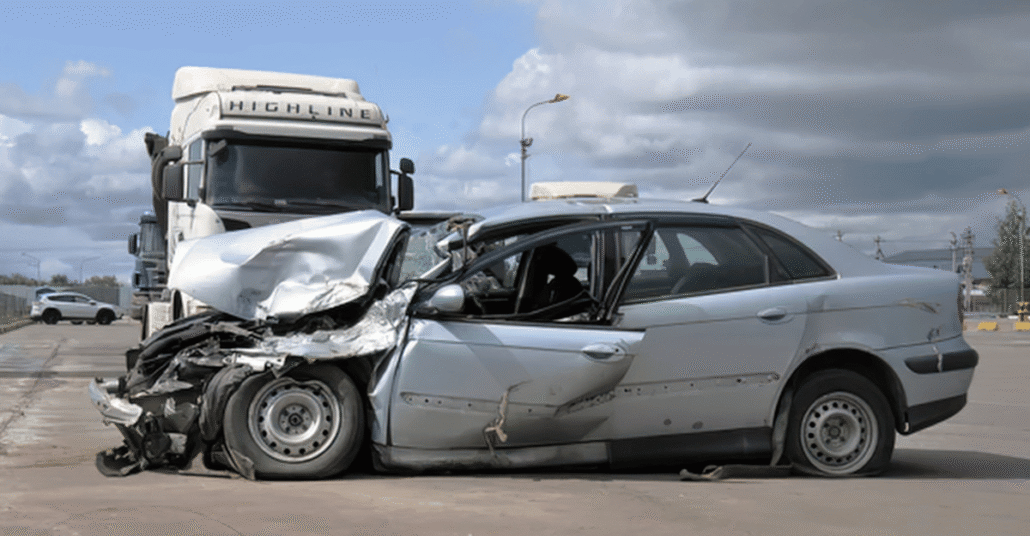
How Trucking Company Negligence Can Lead to Catastrophic Accidents
A single moment on Interstate 64 or the West Virginia Turnpike can permanently change the course of a family’s life. When an 80,000-pound commercial tractor-trailer collides with a standard passenger car, the physical destruction is almost always severe. Victims rushed to Level I trauma centers like Charleston Area Medical Center (CAMC) face life-threatening injuries, grueling surgeries, and months of intensive rehabilitation.
While initial accident reports often focus on the driver behind the wheel, deeper investigations frequently reveal that systemic corporate misconduct was the true root cause of the crash. Commercial trucking companies operate under intense commercial pressure to deliver freight across state lines quickly. When motor carriers prioritize delivery schedules and corporate profit margins over mandatory safety protocols, devastating highway collisions become tragic inevitabilities.
What Causes Most Commercial Truck Accidents in West Virginia?
Most commercial truck accidents in West Virginia are caused by systemic trucking company negligence rather than simple driver error. Common causes include pressuring drivers to violate federal hours of service rules, failing to maintain vehicle brakes, hiring unqualified drivers, and improperly loading cargo for transit through steep mountain highways.
Navigating a fully loaded 18-wheeler through West Virginia’s mountainous terrain requires meticulous preparation, properly maintained equipment, and total driver alertness. Steep downgrades on Interstate 77 and winding corridors along Route 19 leave virtually no margin for mechanical failure or delayed driver reaction times.
When a catastrophic wreck occurs, motor carriers routinely blame adverse weather, sudden mountain fog, or minor errors by passenger car drivers. However, comprehensive post-crash investigations routinely uncover underlying corporate decisions that set the catastrophe in motion long before the truck ever entered state borders.
Corporate negligence in commercial trucking manifests in several distinct operational areas:
-
Unrealistic delivery deadlines that force drivers to speed or skip mandatory rest periods.
-
Deferred mechanical maintenance to keep aging tractor-trailers on the road and cut operational costs.
-
Inadequate driver background checks that allow operators with dangerous driving records to get behind the wheel.
-
Improper cargo distribution that causes heavy loads to shift unpredictably on sharp highway curves.
How Do FMCSA Hours of Service (HOS) Violations Prove Negligence?
Violating FMCSA Hours of Service regulations creates a strong presumption of negligence in a truck accident lawsuit. When trucking companies force drivers to falsify electronic logging devices or drive while severely fatigued, they violate federal law. This documented exhaustion directly reduces reaction times and leads to catastrophic highway collisions.
Driver fatigue is one of the most deadly hazards on American highways. Operating an 80,000-pound commercial vehicle while sleep-deprived produces cognitive impairments similar to driving under the influence of alcohol. Reflexes slow, spatial awareness diminishes, and the likelihood of falling asleep at the wheel increases exponentially.
Because fatigue is so dangerous, federal regulators strictly oversee the maximum hours a commercial operator can work. However, dispatchers frequently pressure drivers to keep moving even when they approach their legal driving limits. Drivers who raise safety concerns often face subtle retaliation, such as being assigned less lucrative routes or losing preferred schedules.
To cover up these violations, some motor carriers encourage drivers to manipulate electronic logging devices (ELDs) or record off-duty status while actively performing work duties like waiting at loading docks. Uncovering these hidden electronic paper trails is a vital component of establishing corporate liability.
What Are the Federal Limits on Truck Driver Hours?
Under 49 CFR Part 395, commercial truck drivers carrying property can drive a maximum of 11 hours after taking 10 consecutive hours off duty. Additionally, all driving must be completed within a strict 14-hour on-duty window, ensuring drivers are not operating massive vehicles while chronically exhausted.
Federal motor safety regulations dictate clear operational boundaries for property-carrying commercial drivers under FMCSA Hours of Service rules. These strict requirements are designed to prevent sleep-deprived drivers from endangering the public.
Key federal limitations include:
-
11-Hour Driving Limit: Operators may drive a maximum of 11 hours after 10 consecutive hours off duty.
-
14-Hour On-Duty Window: Drivers cannot drive beyond the 14th consecutive hour after coming on duty, regardless of rest breaks taken during the shift.
-
Mandatory Rest Breaks: Drivers must take a 30-minute break after accumulating 8 continuous hours of driving time.
-
Weekly Duty Limits: Drivers cannot operate after accumulating 60 hours on duty over 7 consecutive days, or 70 hours over 8 consecutive days.
When a motor carrier demands schedules that conflict with these statutory caps, they consciously choose corporate profit over human safety.
Can A Trucking Company Be Sued for Negligent Hiring or Training?
Yes. A trucking company can be held directly liable for negligent hiring if they fail to conduct mandatory federal background checks, ignore a driver’s history of substance abuse, or hire operators without valid commercial driver’s licenses. Companies must also provide adequate training for handling hazardous road conditions.
Under the legal doctrine of respondeat superior, an employer is generally held vicariously liable for the negligent actions performed by employees within the scope of their employment. However, injured victims can also pursue direct negligence claims against the trucking company itself for negligent hiring, supervision, and retention.
Federal law codified in 49 CFR Part 391 mandates that commercial motor carriers maintain comprehensive driver qualification files. Before placing a driver behind the wheel, the company must thoroughly inspect the applicant’s commercial driving record, verify valid CDL credentials, review past safety violations across all prior employers, and administer mandatory pre-employment drug screenings.
Due to ongoing nationwide truck driver shortages, some motor carriers cut dangerous corners during the hiring process. They routinely ignore past traffic convictions, bypass mandatory drug testing protocols, or fail to verify whether a driver has adequate experience handling heavy loads on steep Appalachian mountain roads. Putting an unqualified or dangerous driver behind the wheel of a massive rig constitutes clear corporate negligence.
Who Is Liable If Poor Maintenance Causes a Truck Crash?
If a commercial truck crashes due to blown tires, failing brakes, or broken steering components, the trucking company is generally liable for negligent maintenance. Federal regulations require motor carriers to perform systematic inspections and immediately repair unsafe vehicles before allowing them on West Virginia highways.
A fully loaded commercial truck requires immense mechanical stopping force. On long mountain downgrades, brake systems operate under extreme thermal stress. If brake pads are worn thin, air lines are leaking, or adjustment mechanisms are broken, the risk of total brake failure increases dramatically, often forcing drivers onto runaway truck ramps or causing catastrophic rear-end collisions.
Under federal law, motor carriers bear an affirmative, non-delegable duty to systematically inspect, repair, and maintain every vehicle under their control. They cannot escape liability by claiming a third-party mechanic performed poor work or that a mechanical failure was entirely unexpected.
When companies delay routine maintenance to keep trucks running continuously, critical components fail. Worn tire treads lead to sudden blowouts at highway speeds, rusted coupling devices cause trailers to detach, and malfunctioning headlights blind oncoming traffic. Reviewing maintenance logs, pre-trip inspection reports, and repair invoices frequently proves that the company knew about mechanical defects but chose to ignore them.
How Does West Virginia’s Modified Comparative Fault Law Impact Truck Accident Claims?
Navigating financial recovery after a commercial vehicle collision requires a firm understanding of state liability rules. Under W. Va. Code § 55-7-13a, West Virginia utilizes a 51 percent bar rule for personal injury lawsuits.
Under this statutory framework, an injured plaintiff can successfully recover compensation from a negligent party as long as the plaintiff’s own proportion of fault does not exceed 50 percent. If a jury determines that an injured motorist was 20 percent at fault for a collision and the trucking company was 80 percent at fault, the injured motorist will still receive 80 percent of the total court award.
However, if the jury decides the plaintiff bears 51 percent or more of the responsibility, the plaintiff is legally barred from recovering any compensation whatsoever. Because of this strict threshold, trucking defense attorneys and insurance adjusters send specialized rapid-response teams to accident scenes within hours. Their primary goal is to gather statements, manipulate physical evidence, and construct arguments that shift blame onto the injured victim to push their assigned fault past 50 percent.
What Evidence Is Needed to Win a Commercial Truck Accident Lawsuit?
Winning a commercial truck accident lawsuit requires securing highly technical evidence before the trucking company destroys it. Critical evidence includes the truck’s electronic logging device (ELD) data, the vehicle’s black box (event data recorder), corporate hiring files, maintenance logs, and immediate scene preservation by accident reconstruction professionals.
Commercial truck accident claims are vastly different from standard passenger vehicle cases. Motor carriers possess vastly superior resources, massive insurance policies, and legal teams trained to protect corporate interests immediately following a collision. Preserving evidence in the days immediately following a crash is essential.
Federal regulations permit trucking companies to overwrite or destroy certain digital records after specific timeframes unless a formal legal demand is issued. Sending an immediate, detailed spoliation letter legally obligates the motor carrier to preserve all physical and digital evidence connected to the incident.
Key evidence required to build an unassailable commercial truck claim includes:
-
Event Data Recorder (EDR) Data: The vehicle’s ‘black box’ records critical telemetry immediately prior to impact, including vehicle speed, brake application, engine RPM, and steering angles.
-
Electronic Logging Device (ELD) Records: Digital logs that verify exact driving hours, rest breaks, and potential HOS violations.
-
Driver Qualification Files: Official records detailing background checks, medical certifications, drug test results, and prior traffic citations.
-
Fleet Maintenance and Inspection Logs: Detailed documentation showing past mechanical repairs, skipped service intervals, or known defects.
-
On-Board Dashcam Video Footage: Forward-facing and interior cab video that provides clear visual evidence of driver actions prior to the crash.
Contact Powell & Majestro for a Free Consultation
A catastrophic commercial truck crash leaves victims facing immense physical pain, astronomical medical bills, and intense emotional trauma. When powerful motor carriers prioritize corporate delivery deadlines over highway safety, they must be held fully accountable for the devastation they cause. You do not have to fight aggressive corporate defense teams alone.
Our skilled attorneys at Powell & Majestro P.L.L.C. have decades of combined legal experience representing injured individuals and grieving families across West Virginia. We bring deep legal knowledge and relentless dedication to every complex commercial vehicle claim.
Call our Charleston office today at (304) 346-2889 to schedule a free, confidential consultation. Let our dedicated legal team protect your rights, preserve critical evidence, and fight for the maximum financial recovery you deserve.
Frequently Asked Questions
How long do I have to file a truck accident lawsuit in West Virginia?
Under W. Va. Code § 55-2-12, West Virginia imposes a strict two-year statute of limitations for personal injury lawsuits resulting from a truck crash. This time clock begins on the exact date the collision occurred. Waiting to consult an attorney can result in the loss of critical digital evidence like ELD logs and black box data, making immediate action vital.
Can I sue the trucking company if the driver was an independent contractor?
Yes, you frequently can. Motor carriers often classify drivers as independent contractors to avoid legal liability and insurance costs. However, under federal safety regulations, if the trucking company maintains operational control over the vehicle or leased equipment, they can still be held legally responsible for crashes caused by that driver.
Why do truck accident settlements take longer than standard car crashes?
Truck accident claims involve significantly higher financial stakes, complex corporate structures, and multiple potentially liable parties. Investigations require analyzing complex telemetry, corporate hiring records, and extensive medical documentation regarding severe injuries. Building an unassailable case to secure maximum compensation requires thorough preparation that takes time.
What kind of damages can I recover after a semi-truck accident?
Victims can seek economic and non-economic damages. Recoverable compensation includes past and future medical bills, lost wages, loss of future earning capacity, physical pain and suffering, emotional distress, permanent disfigurement, and loss of enjoyment of life. In cases involving reckless corporate misconduct, punitive damages may also be pursued.
Will my truck accident case have to go to trial?
Many commercial truck claims are successfully resolved through out-of-court settlements after rigorous evidence gathering and expert depositions. However, if the trucking company’s insurance carrier refuses to offer a fair settlement that fully covers your losses, our attorneys prepare every case with the trial readiness required to present a compelling argument before a jury in circuit court.




Leave a Reply
Want to join the discussion?Feel free to contribute!