Wheeling, WV Car Accident Lawyers
A car accident on the busy roads of Wheeling can shatter your sense of security in an instant. One moment you are navigating the I-70 corridor through the Wheeling Tunnel or heading to The Highlands for shopping, and the next you are surrounded by the chaos of a collision. The aftermath brings a flood of worries: the condition of your vehicle, the severity of your injuries, and the sudden appearance of overwhelming medical bills. For many, this is compounded by the financial strain of lost wages and the frustrating process of dealing with insurance companies.
The physical and emotional recovery journey is challenging enough without the added burden of a complex legal claim.
Navigating the Unique Driving Risks in Wheeling
Wheeling’s location as a hub in the Northern Panhandle presents distinct driving challenges. The constant flow of commercial and passenger traffic on Interstate 70, combined with local commuters on roads like the National Road (US-40), creates a high potential for traffic accidents.
- Interstate Dangers: I-70 and the I-470 bypass are major arteries for interstate travel. High speeds, heavy truck traffic, and sudden slowdowns, particularly around the Wheeling Tunnel, contribute to a significant number of serious collisions, including multi-vehicle pile-ups.
- Urban Congestion: Areas around The Highlands, downtown Wheeling, and near Wheeling University experience heavy traffic, increasing the frequency of rear-end and side-impact accidents.
- Challenging Terrain: Like much of West Virginia, Wheeling features steep hills, sharp curves, and winding roads that can become particularly hazardous during periods of rain, snow, or ice.
- Construction Zones: Ongoing road work and infrastructure projects can create confusing traffic patterns, lane shifts, and unexpected stops, catching even the most careful drivers off guard.
A minor fender-bender can disrupt your life with vehicle repairs and medical appointments. A more severe crash can inflict catastrophic injuries, requiring long-term medical care, rehabilitation, and potentially altering your life permanently. Knowing your legal rights is the first step toward protecting your future.
What Are the Common Causes of Vehicle Collisions?
Most automobile accidents are not truly “accidents” but are the result of another party’s negligence. Negligence is a legal term for the failure to use reasonable care, resulting in harm to another person. In the context of driving, this behavior can manifest in many ways.
- Distracted Driving: This remains a leading cause of preventable crashes. Texting, talking on a cell phone, using a navigation system, eating, or attending to passengers are all activities that divert a driver’s focus from the primary task of operating the vehicle safely.
- Driving Under the Influence (DUI): Operating a vehicle while impaired by alcohol or drugs dramatically slows reaction time, impairs judgment, and reduces coordination. It is a reckless choice that frequently leads to devastating consequences.
- Excessive Speeding: Exceeding the speed limit or driving too fast for current road or weather conditions reduces the time a driver has to react to a hazard and increases the severity of an impact.
- Aggressive and Reckless Driving: Behaviors like tailgating, unsafe lane changes, weaving through traffic, and ignoring traffic signals demonstrate a willful disregard for the safety of others on the road.
- Drowsy Driving: Fatigued driving can be just as dangerous as impaired driving. A tired driver experiences slowed reaction times, reduced awareness, and may even fall asleep at the wheel.
- Failure to Obey Traffic Laws: Many collisions, especially T-bone accidents, occur at intersections because a driver runs a red light or stop sign or fails to yield the right-of-way.
Proving that another driver’s negligence caused the crash is fundamental to a successful personal injury claim. This requires a thorough investigation to gather evidence that establishes liability.
Types of Car Accidents Frequently Seen in the Wheeling Area
The way a collision occurs often provides important clues about how it happened and who may be at fault. Our firm handles claims arising from all types of motor vehicle crashes.
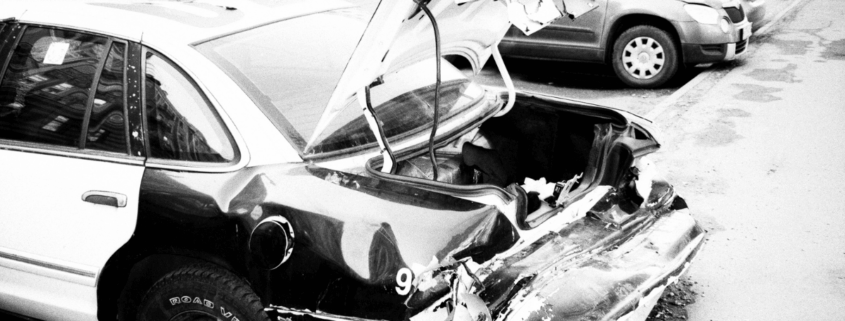
- Rear-End Collisions: Often occurring in heavy traffic or at stoplights, these accidents usually happen when a following driver is distracted or tailgating. While sometimes dismissed as minor, they are a common cause of whiplash and other soft tissue injuries.
- Side-Impact (T-Bone) Wrecks: These dangerous crashes typically happen at intersections when one vehicle strikes the side of another. They often result from a failure to yield or disregarding a traffic signal and can cause severe injuries to occupants on the struck side.
- Head-On Collisions: Though less frequent, head-on impacts are among the most catastrophic types of accidents. They occur when the front ends of two vehicles traveling in opposite directions collide, often due to impaired driving, fatigue, or a driver crossing the center line.
- Sideswipe Accidents: These happen when the sides of two vehicles traveling in the same direction make contact. This can be caused by an improper lane change or a driver drifting from their lane, sometimes forcing one of the vehicles off the road or into another collision.
- Rollover Crashes: These violent events can be triggered by a high-speed maneuver, being struck in a T-bone collision, or sliding off the road. SUVs and trucks with a higher center of gravity are more susceptible to rolling over, which often results in serious or fatal injuries.
- Multi-Vehicle Pile-Ups: Common on high-speed interstates like I-70, these chain-reaction accidents can be incredibly complex. Determining liability may involve reconstructing the entire sequence of events to identify the initial negligent act that started the pile-up.
- Accidents Involving Commercial Trucks: Collisions with large trucks, tractor-trailers, or other commercial vehicles present unique challenges due to the massive size and weight disparity and the involvement of federal trucking regulations.
What Steps Should You Take Immediately After a Car Accident?
The actions you take in the minutes and hours following a crash can have a significant impact on your health and your ability to pursue a legal claim. While the situation is stressful, try to remain calm and follow these steps.
- Prioritize Safety: Check on yourself and your passengers for injuries. If possible, move your vehicle out of active traffic lanes to a safe location like the shoulder. Turn on your hazard lights.
- Call 911: Report the accident to law enforcement and request medical assistance if anyone is injured. A police report creates an official record of the incident, which is an important piece of evidence.
- Exchange Information: Get the name, address, phone number, driver’s license number, and insurance information from all other drivers involved. Also, get the license plate numbers of their vehicles.
- Document the Scene: If you are physically able, use your smartphone to take pictures and videos of the accident scene from multiple angles. Capture the damage to all vehicles, any skid marks, traffic signals, and your visible injuries.
- Talk to Witnesses: If there are any witnesses, ask for their names and contact information. Their independent account of what happened can be invaluable.
- Seek Medical Attention: Even if you feel fine, it is important to be evaluated by a medical professional. Some serious injuries, like internal bleeding or whiplash, may not have immediate symptoms. This also creates a medical record linking your injuries to the accident. Many victims in the area are treated at Wheeling Hospital or WVU Medicine Reynolds Memorial Hospital.
- Report the Accident: Notify your own insurance company that you were in an accident. Stick to the basic facts and avoid speculating about fault or the extent of your injuries.
- Consult an Attorney: Before giving a recorded statement to the other driver’s insurance company or accepting any settlement offer, speak with an experienced car accident lawyer.
How Is Liability Determined in a West Virginia Car Accident Claim?
To secure compensation, you must prove that another party was legally at fault for the accident. This involves demonstrating four elements of negligence:
- Duty: The other driver had a legal duty to operate their vehicle with reasonable care.
- Breach: The driver breached that duty through a negligent act, such as speeding or texting.
- Causation: This breach of duty was the direct cause of the collision and your injuries.
- Damages: You suffered actual losses (damages) as a result, such as medical bills and lost income.
West Virginia follows a legal doctrine known as modified comparative negligence. Under this rule, you can still recover damages even if you were partially at fault for the accident, as long as your share of the fault is less than 50%. However, your final compensation award will be reduced by your percentage of fault. For example, if you have $100,000 in damages but are found to be 10% at fault, your award would be reduced by $10,000, for a total recovery of $90,000. If your fault is determined to be 50% or more, you are barred from recovering any compensation at all.
What Kinds of Compensation Can Be Recovered After a Crash?
A successful personal injury claim can provide financial recovery for the full range of losses you have suffered. These losses, known as damages, are generally categorized as economic and non-economic.
Economic Damages are tangible financial losses that can be calculated and proven with documents like bills and receipts.
- All past and future medical expenses (hospital stays, surgeries, therapy, medication)
- Lost wages from time missed at work
- Loss of future earning capacity if your injuries prevent you from returning to your job
- Property damage to repair or replace your vehicle
Non-Economic Damages are intangible losses related to the impact the injuries have had on your life.
- Pain and suffering
- Emotional distress and mental anguish
- Loss of enjoyment of life
- Permanent scarring or disfigurement
- Loss of consortium (for the impact on a marital relationship)
What is the Deadline for Filing a Car Accident Lawsuit in West Virginia?
Every state sets a time limit for filing a personal injury lawsuit, known as the statute of limitations. In West Virginia, you generally have two years from the date of the accident to file a lawsuit. If you fail to file your claim within this two-year window, the court will likely dismiss your case, and you will lose your right to seek compensation forever. While there are some narrow exceptions, it is vital to act quickly to protect your legal rights.
Choose Powell & Majestro for Your Car Accident Claim
If you or a loved one has been injured in a car accident in Wheeling, you do not have to carry the burden alone. The road to recovery can be long, and the legal system is complex. Having a dedicated legal team on your side can make all the difference. We will handle the investigation, negotiate with the insurance companies, and stand up for your rights so you can focus on what matters most—healing.
Contact Powell & Majestro P.L.L.C. today for a free, no-obligation consultation to discuss your case. Call us at 304-346-2889 or complete our online contact form to get started. Let our team provide the determined legal representation you need during this difficult time.